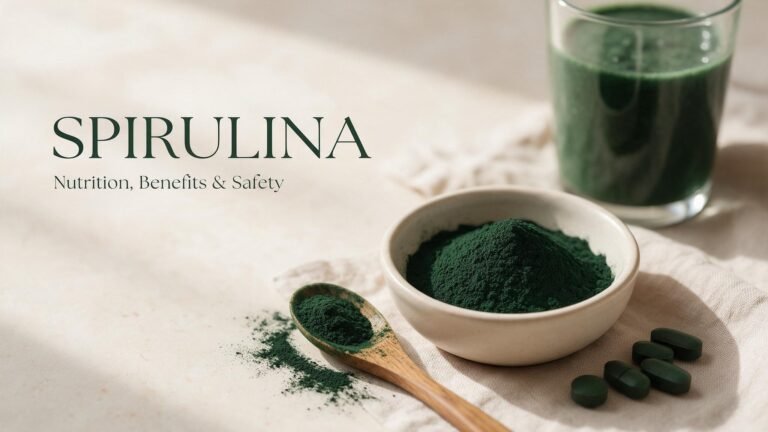
Spirulina is a blue-green microorganism called a cyanobacterium, commonly sold as powder, tablets, or capsules. It contains protein, iron, beta-carotene, and the blue pigment phycocyanin. It is a nutritional supplement—not a leafy herb or an established classical Ayurvedic medicine.
Benefits 
-
Nutrition: Provides protein and some minerals, although a small daily serving supplies only a modest amount of protein. It is not a reliable vitamin B12 source.
-
Cholesterol: Studies suggest it may lower LDL (“bad”) cholesterol and triglycerides.
-
Blood sugar: It may modestly lower fasting blood sugar, but research has not consistently shown an improvement in HbA1c, the longer-term blood sugar measurement.
-
Blood pressure: Some small studies suggest a reduction in people with high blood pressure.
These benefits are promising, but spirulina is not a replacement for prescribed treatment.
Bad effects and risks
-
Possible side effects include nausea, gas, bloating, diarrhea, and headaches. Allergic reactions can also occur.
-
Contaminated products may contain heavy metals, bacteria, or microcystins—toxins that can damage the liver and kidneys. Choose a product with independent testing for these contaminants.fda+1
-
Avoid it if you have phenylketonuria (PKU), a condition that prevents proper processing of the amino acid phenylalanine.
-
Get medical advice before taking it during pregnancy or breastfeeding, or if you have an autoimmune condition or take blood thinners, diabetes medicines, or immune-suppressing medicines.
When to take it
Take it with breakfast or lunch if that makes it easier to remember. Taking it with food may reduce stomach discomfort; there is no established best time or proven advantage to taking it on an empty stomach.
Follow the product label. Studies use different amounts, and there is no established dose for treating a particular illness.
Which Ayurvedic dosha is it used for?
There is no reliably established classical dosha classification for spirulina.
Some modern Ayurvedic sources describe it as cooling and suitable for Pitta, sometimes also Kapha. However, sources disagree about Vata—some say it balances Vata, while others say it may aggravate it. These are modern interpretations, not scientifically proven dosha-specific benefits.
“Some modern Ayurvedic practitioners consider spirulina suitable for Pitta, but its effects on the three doshas are not consistently established.”